
Clogged Drain Repair in Palm Bay FL
This page is for the drain that has stopped, not the one that is getting slower — one fixture holding water while the rest of the house drains normally.
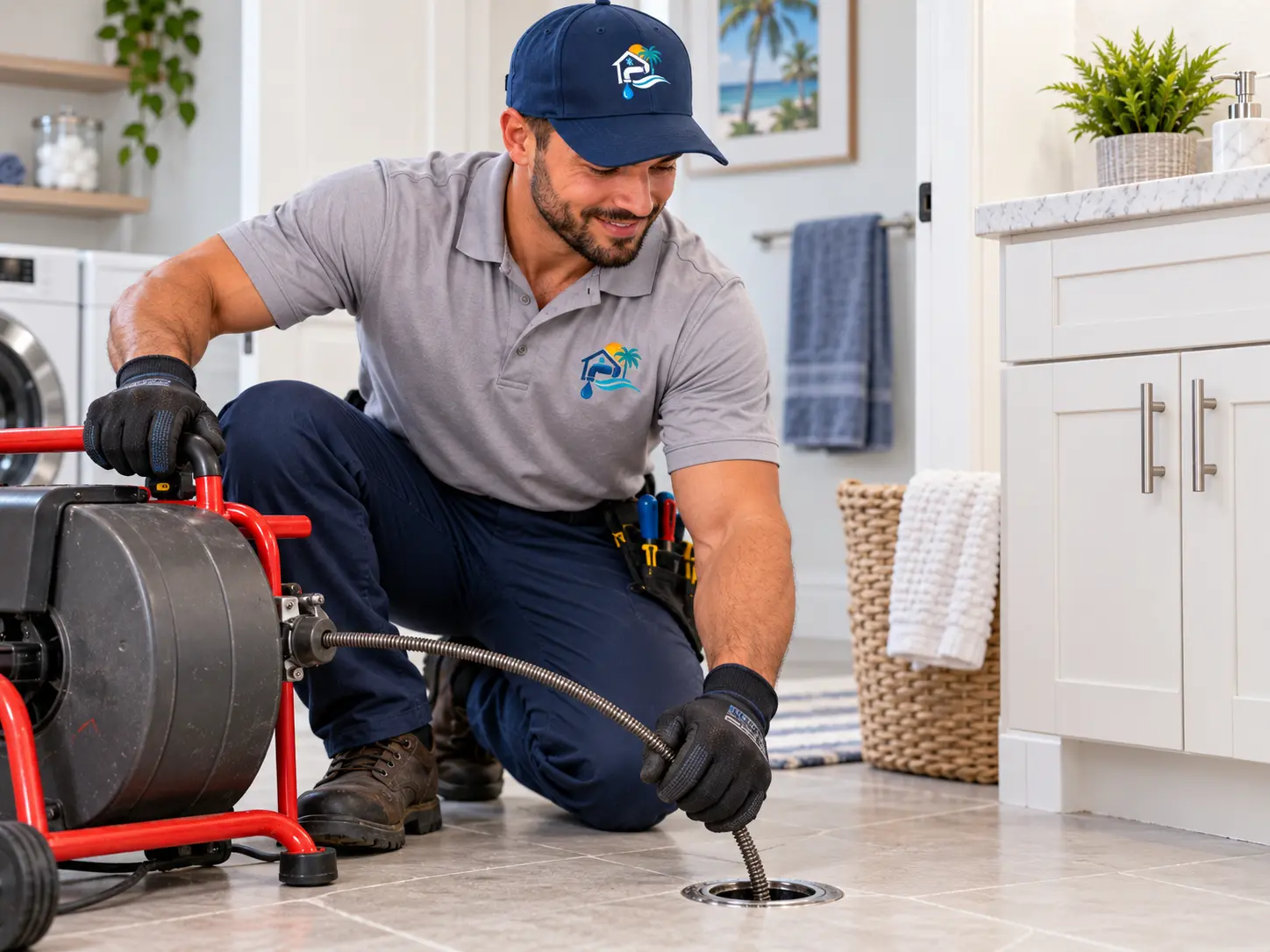
A hard stoppage in a single fixture is a localized problem. Something is physically occupying the pipe: a hair mass, a grease plug, a foreign object, or a collapsed section of an older trap arm. The fixture is unusable until that object is removed or broken up.
The distinction from routine drain cleaning matters because the approach differs. Cleaning restores flow in a line that is narrowing. Clog repair targets one obstruction, sometimes by opening the trap, sometimes by pulling the fixture, occasionally by cutting out a section that has failed.
How to tell where the blockage sits
That last symptom is the important one. Water that appears somewhere you did not run it means the blockage is past the point where those two drains join, and that changes both the tool and the access point.
- One fixture blocked, everything else fine: the branch line or trap for that fixture
- Both sink bowls blocked, disposal side worse: the shared branch past the tee
- Tub and toilet in the same bathroom affected: the line serving that group
- Every low fixture in the house affected: the main line, not this page — see sewer line repair
- Water rising in a different fixture when one is used: the shared line downstream
What usually causes a hard stoppage
Kitchen stoppages are dominated by grease combined with starch and fibrous food waste. Poured warm, grease travels; cooled in the line, it sets into a plug that catches everything arriving behind it. Rice, pasta and coffee grounds accelerate the process.
Bathroom stoppages are dominated by hair bound with soap and conditioner residue, usually at the stopper assembly, the trap, or a drum trap in older construction. Toilets are dominated by non-flushable items — wipes marketed as flushable, cotton products, dental floss and small objects that fit the trapway on the way in but not the way out.
Foreign objects deserve special mention because they change the plan. A cable will often pass around a hard object rather than removing it, restoring flow temporarily while leaving the obstruction to catch the next thing that comes down the line.
How the blockage is removed
The least invasive path is first: clearing the trap and stopper assembly, since a large share of sink and tub stoppages sit within reach of a removed P-trap and cost nothing extra to check.
If the obstruction is further down, a cable machine sized to the pipe is fed from the cleanout or fixture opening. The cutting head breaks up the mass and pulls it back, and the line is then flow-tested under real volume rather than a trickle.
For toilets, an auger designed for a porcelain trapway is used to avoid scratching the bowl. When an object cannot be retrieved through the trapway, pulling and resetting the toilet with a fresh wax seal is the reliable way to reach it. Repeated stoppages in the same fixture warrant a camera before more cabling.
Safe homeowner steps before calling
- Stop running water into the blocked fixture — added volume has nowhere to go
- Try a cup plunger on sinks and tubs with the overflow covered, or a flange plunger on toilets
- Remove and clean the pop-up stopper in a bathroom sink; hair collects directly on it
- Empty the cabinet below in case the trap has to be opened
- Skip caustic drain chemicals, particularly on a fully stopped line
When one clogged drain is really a bigger issue
A single fixture that clogs every few weeks is not bad luck. Common underlying causes include a trap arm with insufficient fall, a partially collapsed pipe, a vent that is blocked so the drain cannot breathe, or an accumulation of scale that leaves very little usable diameter.
When several fixtures are involved, the conversation shifts to the main line entirely, and the useful next step is sewer line repair rather than another clearing.
What this work usually costs
The lowest-cost outcome is a stoppage cleared through an existing cleanout in a single pass. Cost rises when the fixture has to be pulled, when there is no cleanout and access must be created, when the obstruction is a foreign object rather than buildup, or when the visit ends in a camera inspection because the line has failed repeatedly.
The plumbing cost guide breaks down the variables in detail, and the cost calculator turns them into a planning range you can budget against.
Related plumbing services
Where this service is available
Palm Bay is the primary service market, along with these nearby Brevard County communities:
Clogged Drain Repair questions
Why does my sink clog again a few weeks after it is cleared?
Fast repeats usually mean the line was punched through rather than cleaned out. A cable can bore a channel through a grease plug, which restores flow immediately while leaving most of the material on the pipe wall to close back in. It can also mean the pipe has a low spot holding water, or a rough interior that grabs everything passing through. If a line comes back within a month or two, a camera inspection and a scouring method such as jetting typically resolve what repeated cabling will not.
Are flushable wipes actually flushable?
They clear the toilet, which is all the label really claims. They do not break apart the way toilet paper does, so they stay intact in the drain line and snag on anything rough — a joint, a scale deposit, a root. In homes with older lateral lines they are one of the most common causes of repeat blockages, and in septic systems they accumulate rather than degrade. The practical guidance is simple: toilet paper and human waste only, regardless of packaging claims.
Can I use a drain snake from the hardware store?
A small hand auger is reasonable for a bathroom sink or tub where the blockage is close to the fixture, and it is often the fastest fix for hair at a stopper. Limits appear quickly, though. A short consumer cable cannot reach a branch line clog, and forcing one can kink the cable inside the pipe or crack a fitting on older plastic. Toilets need a purpose-made closet auger; a general drain snake can chip the porcelain glaze and leave a permanent snag point in the trapway.
The clog cleared on its own — is that a problem?
Sometimes. Blockages that pass on their own often do so partially, leaving material downstream that continues to catch debris. If a fixture stopped completely and then began draining again with no intervention, note the date. A second event within a few months means the line still holds the underlying obstruction and is worth clearing properly rather than waiting for the version that does not resolve itself, which tends to arrive at the least convenient time.
Need Plumbing Help in Palm Bay?
Describe what is happening and get help scheduling the right plumbing service for your home.