
Faucet Repair in Palm Bay FL
Faucets fail in four familiar ways: they drip, they leak underneath, they get stiff, or they lose flow. Each points at a different part of the assembly.
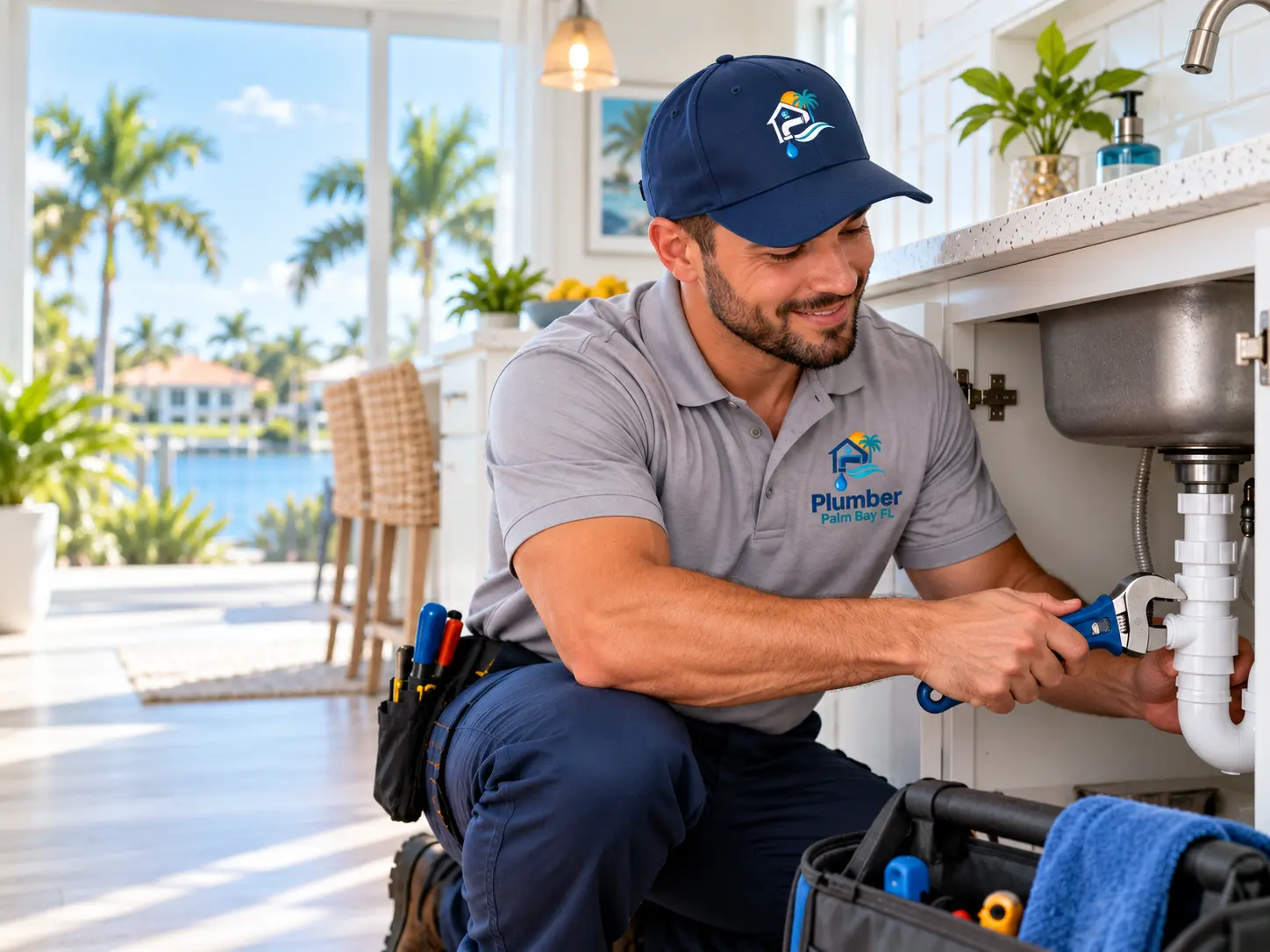
The moving parts inside a faucet are a cartridge or valve assembly, a set of seals, and an aerator at the outlet. Hard water shortens the life of all three by depositing scale on the surfaces that need to seal or slide.
Because the parts are inexpensive, faucet work is usually about labor and about whether the right cartridge is available for the model in question.
Reading the symptom
- Drip from the spout with the handle closed: worn cartridge, seat or O-ring
- Leak at the handle base: failed handle O-ring or a loose retaining nut
- Leak under the cabinet only while running: connection, supply line or drain tailpiece
- Constant damp under the cabinet: an angle stop weeping, which happens with age
- Reduced flow at one faucet: clogged aerator or scale in the cartridge
- Stiff or gritty handle motion: mineral buildup inside the cartridge
Why hard water is the usual culprit
Dissolved minerals precipitate wherever water sits still or passes through a small opening. Aerators clog first because their screens are the finest restriction in the path. Cartridges follow, since scale on the ceramic discs or the sealing surfaces prevents a clean shutoff and produces the classic post-shutoff drip.
Cleaning an aerator is a five-minute task that resolves a meaningful share of low-flow complaints, and it is worth doing before assuming the faucet needs replacing.
What repair involves
The supply stops are closed, the faucet is depressurized, and the handle and retaining hardware are removed to access the cartridge. The old cartridge is pulled, the body is cleaned of scale, and a matching replacement is fitted with fresh O-rings and appropriate lubricant.
Where the leak is below the sink rather than at the fixture, the work shifts to connections: replacing braided supply lines, resetting a compression fitting, or replacing an angle stop that no longer seals. Angle stops that have not been turned in many years often fail once they are moved, which is why they are frequently replaced during other under-sink work rather than left as a future surprise.
Repair or replace the faucet
Repair is straightforward when the faucet is a known brand with parts still in production, when the body and finish are sound, and when the problem is a single component. Many quality faucets are designed to be rebuilt repeatedly.
Replacement is the better path when the cartridge is unavailable, when the base is corroded or the finish is failing, when the faucet is a low-cost unit with proprietary internals, or when the sink is being changed anyway. Mounting hardware on older installations is frequently corroded, and that is where most of the labor in a replacement goes.
Safe checks first
- Remove and soak the aerator in vinegar to dissolve scale, then rinse and reinstall
- Verify both angle stops are fully open before assuming the faucet is restricting flow
- Place a dry paper towel under connections overnight to locate a slow leak precisely
- Note the faucet brand and model — it determines which cartridge is required
- Avoid forcing a seized handle screw; stripped hardware makes the repair harder
What this work usually costs
Cartridge and aerator work sits at the low end of plumbing pricing. Costs increase with corroded mounting hardware, tight cabinet access, angle stops that must be replaced to complete the job, or a full faucet replacement including new supply lines.
The plumbing cost guide breaks down the variables in detail, and the cost calculator turns them into a planning range you can budget against.
Related plumbing services
Where this service is available
Palm Bay is the primary service market, along with these nearby Brevard County communities:
Faucet Repair questions
Why does my faucet still drip after I replaced the washer?
Most modern faucets do not use washers at all — they use a cartridge or ceramic disc assembly, and replacing a washer in a faucet designed around a cartridge will not stop the drip. Even on older compression faucets, a new washer seals poorly if the valve seat it presses against is pitted or scaled. In that case the seat needs to be dressed or replaced along with the washer. Identifying the faucet type first saves repeating the same repair, since the right part for the wrong design never holds.
Can low flow at one faucet mean a bigger problem?
Usually not. Flow loss at a single fixture with normal pressure everywhere else is almost always the aerator or the cartridge in that faucet. It becomes worth investigating further when several fixtures drop at the same time, when only hot flow is reduced across the home — which can point at the water heater or a failing dip tube — or when the reduction appears suddenly after work on the supply system, since debris dislodged during that work often lands in the nearest aerators.
How long should a faucet last?
A well-made faucet can serve fifteen to twenty years with occasional cartridge replacements, and the cartridges themselves commonly last several years each in hard water. Inexpensive units with plastic internals may need attention within a few years. Maintenance extends life considerably: cleaning aerators, avoiding abrasive cleaners on the finish, and replacing a cartridge as soon as it starts dripping rather than forcing the handle harder to stop the drip, which accelerates wear on every sealing surface inside.
Should I replace both supply lines when repairing a faucet?
It is usually worth it. Braided stainless supply lines are inexpensive, and the old ones are already disconnected during the work, so the additional labor is minimal. Older lines — especially plastic ones or those with corroded crimps — are a common source of sudden under-sink failures, and a supply line that lets go while nobody is home causes far more damage than the part is worth. The same logic applies to angle stops that feel stiff or weep when operated during the repair.
Need Plumbing Help in Palm Bay?
Describe what is happening and get help scheduling the right plumbing service for your home.