
Plumbing Repair in Palm Bay FL
General plumbing repair covers the everyday failures that make a house frustrating to live in — dripping fixtures, stuck valves, weak flow, small leaks and drains that never quite work right.
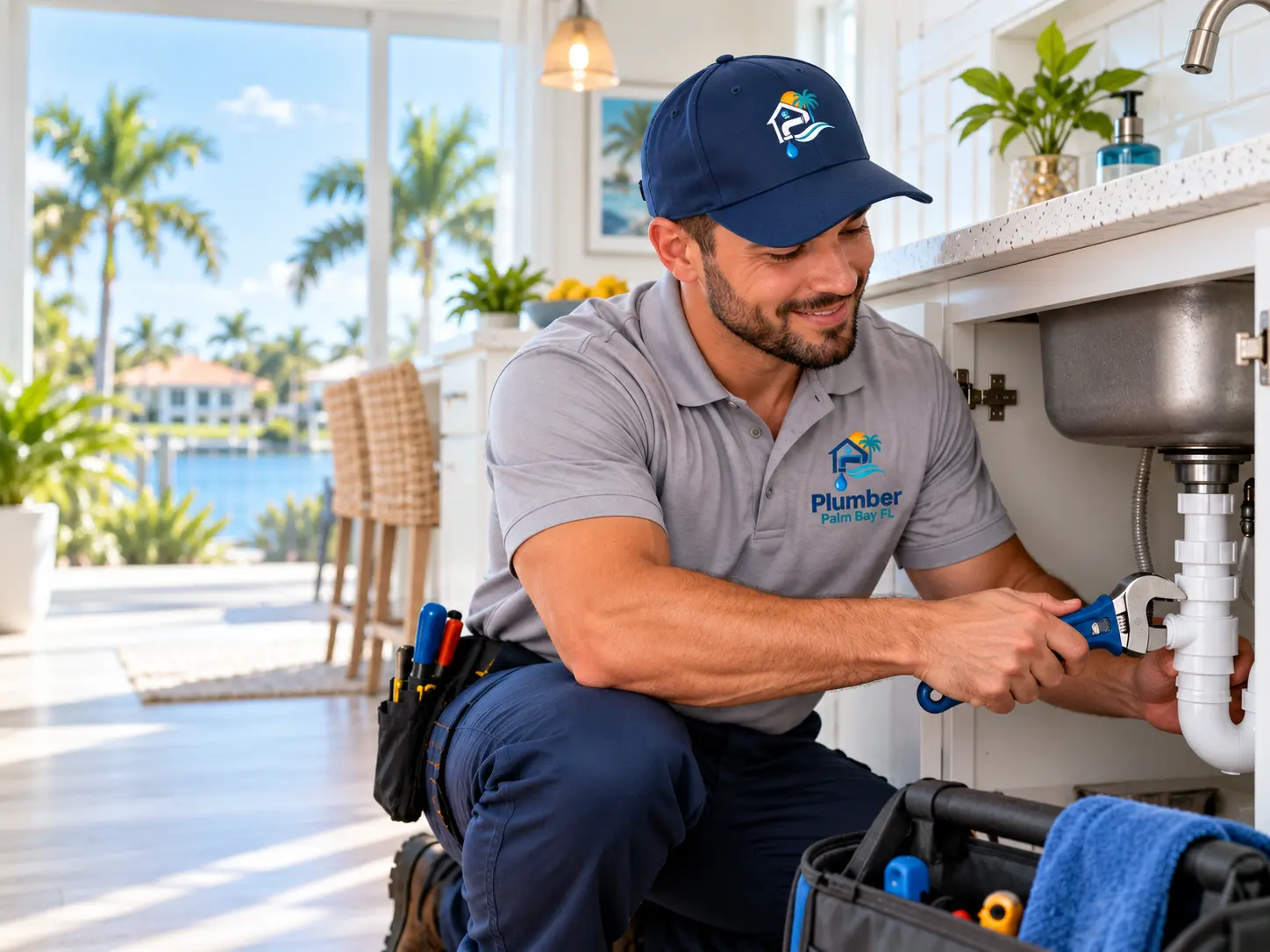
Most plumbing repairs are small mechanical problems in old parts. Cartridges wear, washers harden, supply lines corrode at the crimp, angle stops seize because nobody has turned them in fifteen years. None of it is dramatic, and all of it gets worse if it is ignored long enough.
The value of a repair visit is usually in the diagnosis rather than the wrench work. Low pressure at one sink and low pressure across the whole house are entirely different problems with similar symptoms, and guessing wrong means replacing parts that were never the issue.
Signs a repair is due
- A faucet that drips after the handle is fully closed
- Handles that are stiff, loose or turn past their stop
- Shutoff valves that weep when they are opened or closed
- Discoloration, staining or softness in the cabinet floor under a sink
- Weak flow at one fixture while everything else is normal
- Pipes that knock or bang when a fixture shuts off quickly
- A water bill that climbs with no change in household habits
Common causes behind everyday failures
Hard water is a recurring factor in Brevard County. Mineral content builds up inside aerators, cartridges, valve seats and heating elements, restricting flow and shortening the life of moving parts. A faucet that seems to fail early has often just been running scale through it for years.
Age is the other major factor. Supply connectors, angle stops and toilet fill valves are consumables — they are engineered to be replaced, not to last as long as the house. Repair work that swaps a failing part before it lets go is cheaper than the same part replaced after it floods a cabinet.
Pressure matters too. Municipal pressure that runs high stresses every joint and appliance connection in the system. When several small leaks appear across a home in a short window, checking the pressure regulator is more useful than repairing each leak in isolation.
What a repair visit typically involves
The visit starts with reproducing the symptom and isolating where it comes from. That often means testing pressure, checking a fixture with the aerator removed, watching a drain under load, or shutting a stop to see whether a leak stops with it.
Once the failure point is identified, the options are usually rebuild or replace. Rebuilding — new cartridge, new seals, new fill valve — makes sense when the body of the fixture is sound and parts are still available. Replacement makes sense when the fixture is corroded, obsolete, or when the repair would cost most of what a new unit does.
Whatever the fix, the work should end with the system tested under normal use: valves cycled, connections checked dry, drains run, and the surrounding cabinet or wall inspected for existing damage.
Repair or replace
Repair is the right call for a single failed component in an otherwise good fixture, for valves that only need packing or a new seat, and for anything under warranty. Replacement is the better call when the same fixture has been repaired repeatedly, when the finish and internals are both worn, or when the part is no longer manufactured.
Piping follows the same logic on a larger scale. One pinhole in a copper line is a repair. A third pinhole in the same run within a year is a signal about the whole run, and patching it again is spending money on a section that is telling you what it plans to do next.
Safe things a homeowner can check first
Skip anything that involves cutting into pipe, working on gas connections, or removing a fixture that is holding back pressure. Those tasks are where a small repair turns into an emergency.
- Unscrew and clean the aerator on a slow faucet — mineral buildup is common
- Confirm the angle stops under a fixture are fully open
- Look under sinks with a flashlight and a dry paper towel to spot slow leaks
- Read the water meter with everything off; movement means water is going somewhere
- Check that a stiff handle is not simply a worn cartridge before replacing the whole faucet
What this work usually costs
Repair pricing depends on the part, the access and the diagnosis time. A cartridge swap on an accessible faucet sits at the low end. A valve buried behind a finished wall, or a leak that has to be located before it can be repaired, sits considerably higher because the labor is in reaching it.
The plumbing cost guide breaks down the variables in detail, and the cost calculator turns them into a planning range you can budget against.
Related plumbing services
Where this service is available
Palm Bay is the primary service market, along with these nearby Brevard County communities:
Plumbing Repair questions
Why is my water pressure suddenly low?
Start by checking whether it is one fixture or the whole house. A single slow faucet is usually a clogged aerator or a failing cartridge, and both are inexpensive fixes. Whole-house pressure loss points at something upstream: a partly closed main valve, a failing pressure regulator, mineral buildup in older galvanized piping, or a leak between the meter and the house. A sudden change across every fixture is worth investigating quickly, since a hidden supply leak can lose a lot of water before it becomes visible.
Is a small drip actually worth fixing?
Usually yes, for two reasons. A steady drip wastes a surprising volume of water over a billing cycle, and the drip itself is evidence that a seal or seat has failed. Failed seals rarely stabilize; they widen. The second reason matters more under a sink or inside a wall, where the water lands on cabinet material or drywall instead of in a drain. Repairing a dripping fixture is one of the least expensive plumbing jobs there is, and it stays that way only while it is small.
Why do my pipes bang when I shut off a faucet?
That noise is water hammer — moving water stopping abruptly and transmitting the shock through the piping. It is common with quick-closing valves like washing machine and dishwasher solenoids. Beyond the noise, repeated hammering stresses joints and fittings over time. Fixes include installing or replacing water hammer arrestors, securing loose pipe runs so they cannot move against framing, and correcting system pressure if it is running high. It is worth addressing rather than living with.
Can you repair fixtures I bought myself?
In most cases yes, provided the fixture is a standard configuration and complete with its parts. Homeowner-supplied fixtures are common, and installation is straightforward when the rough-in matches. The caveat is that warranty coverage on the product stays with the manufacturer and the purchase, and some inexpensive fixtures have proprietary internals that are difficult to service later. It is worth asking about serviceability before buying, not after.
Need Plumbing Help in Palm Bay?
Describe what is happening and get help scheduling the right plumbing service for your home.