
Leak Detection in Palm Bay FL
Hidden leaks announce themselves indirectly — a rising water bill, a warm spot on the floor, a stain that keeps returning. Finding the source before opening anything is the entire point of this work.
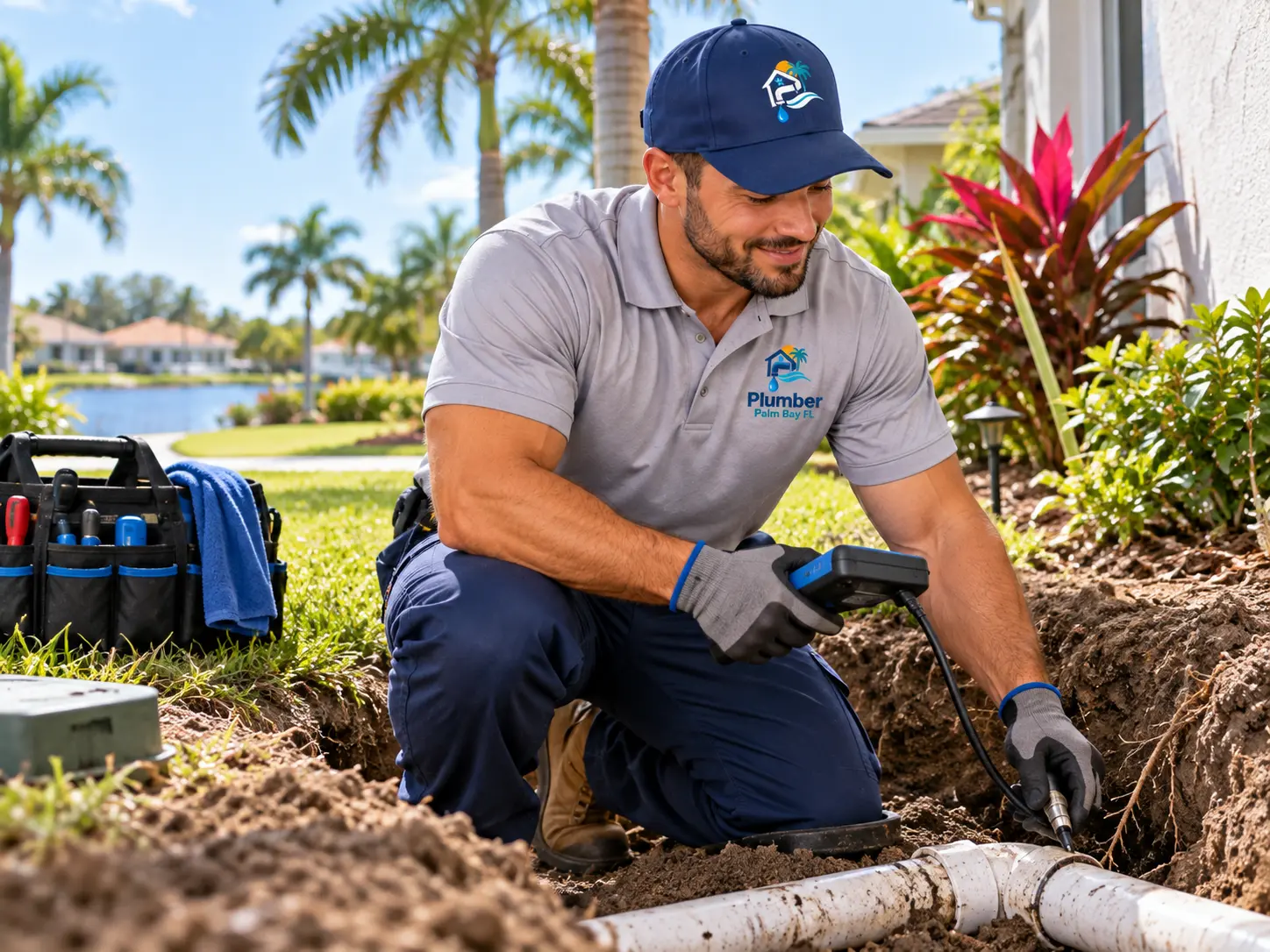
Water travels along the path of least resistance, which means the place it appears is often nowhere near the place it escapes. A ceiling stain in a hallway can originate from a supply line several feet away, following a joist until gravity wins.
Slab construction is common throughout Palm Bay, and that changes the picture. A leak under concrete has no visible path at all until it surfaces through flooring, raises a water bill, or shows up as a warm patch where a hot line is losing water.
Signs of a hidden leak
- A water bill that rises with no change in household use
- The sound of running water when every fixture is off
- Warm or unusually damp spots on a tile or slab floor
- Stains, bubbling paint or soft drywall that keeps coming back after repainting
- A musty odor in one area of the home with no visible source
- Reduced pressure across the whole house with no other explanation
- Grass or landscaping that stays green in one patch during dry stretches
Confirming there is a leak at all
The meter test is the standard first step and you can do it yourself. Turn off every fixture and appliance that uses water, then read the meter — including the low-flow indicator if it has one. Wait thirty minutes without using water and read it again. Any movement means water is leaving the system somewhere.
Narrowing it further: close the main shutoff at the house and repeat the test. If the meter still moves, the leak is between the meter and the house. If it stops, the leak is inside the structure. That single distinction saves a great deal of investigation time.
How leaks are located
Acoustic listening equipment amplifies the sound of water escaping under pressure, which carries through pipe, soil and concrete. In practiced hands it narrows a slab leak to a small area rather than a room.
Thermal imaging identifies temperature differences created by water moving behind a surface, and is especially effective on hot-water lines beneath a slab. Pressure isolation testing separates hot from cold and one zone from another to determine which section is losing pressure. Tracer gas and moisture meters are used where those methods are inconclusive.
The objective throughout is a small, confident opening rather than exploratory demolition. The cost of finding a leak accurately is almost always less than the cost of repairing the surfaces opened while searching for it.
What happens after the leak is found
Accessible leaks are repaired directly — a section of pipe, a fitting, or a fixture connection. Slab leaks offer more than one path: opening the slab to repair the specific spot, rerouting the affected line through walls or the attic to bypass the slab entirely, or repiping when the same line has failed more than once.
Which path is right depends on pipe material, the number of previous failures, and the location of the leak relative to finished surfaces. A single failure in otherwise sound copper is a spot repair. Repeated pinholes in the same run is a rerouting conversation. Pipe repair covers what those repairs involve.
Reducing the risk of hidden leaks
- Compare water bills month to month and treat unexplained jumps as data
- Have system pressure checked; chronically high pressure shortens the life of every joint
- Inspect visible connections at the water heater, under sinks and at appliances periodically
- Replace aging washing machine hoses before they fail
- Act on the first stain rather than repainting over it
What this work usually costs
Detection is priced separately from repair because it is separate work. A leak that is confirmed and located quickly with meter testing and acoustic equipment sits at the lower end. Slab leaks, underground service line leaks and cases requiring multiple methods take longer and cost more, but they cost far less than opening finished surfaces to search blindly.
The plumbing cost guide breaks down the variables in detail, and the cost calculator turns them into a planning range you can budget against.
Related plumbing services
Where this service is available
Palm Bay is the primary service market, along with these nearby Brevard County communities:
Leak Detection questions
How do I know if I have a slab leak?
The typical indicators are a warm area on the floor, the sound of running water with everything shut off, an unexplained increase in the water bill, and flooring that lifts, buckles or stays damp. Some slab leaks also produce a general drop in water pressure. None of these are conclusive alone, which is why the meter test matters: shut off all water use and watch whether the meter continues to register flow. If it does, and the leak is not visible anywhere, the slab is a leading suspect and locating equipment is the appropriate next step.
Will my homeowners insurance cover a leak?
Policies differ, and the distinction that usually matters is between the damage and the plumbing itself. Many policies cover sudden and accidental water damage to the structure while excluding the cost of repairing the failed pipe, and many exclude damage from leaks that occurred gradually over a long period. Documentation helps: photograph what you see, keep the detection and repair records, and report the claim promptly. Read the policy language on water damage before assuming either coverage or exclusion, and ask the carrier directly about slab leak provisions.
Can I find a leak myself?
You can confirm one and narrow it down considerably. The meter test tells you whether water is escaping. Shutting the main and repeating the test tells you whether it is inside or outside the house. Checking under every sink, behind toilets, around the water heater and at appliance connections rules out the easy cases, and a dye test in each toilet tank rules out silent tank leaks. What generally requires equipment is pinpointing a leak inside a wall or under concrete, which is exactly the situation where guessing gets expensive.
How urgent is a small hidden leak?
More urgent than the volume suggests. A hidden leak runs continuously, and even a small flow saturates surrounding material over weeks. In a wall cavity that means drywall, framing and insulation, which brings mold into the conversation in a humid climate. Under a slab it means water moving through soil beneath the foundation. The plumbing repair itself rarely gets more expensive with time, but the restoration work does, and that is the part that grows. Locating the source early is what keeps the total cost small.
Need Plumbing Help in Palm Bay?
Describe what is happening and get help scheduling the right plumbing service for your home.