
Water Heater Installation in Palm Bay FL
Replacing a water heater is a sizing and configuration decision as much as a swap. Getting capacity, fuel type and placement right is what determines whether the new unit is an improvement or just newer.
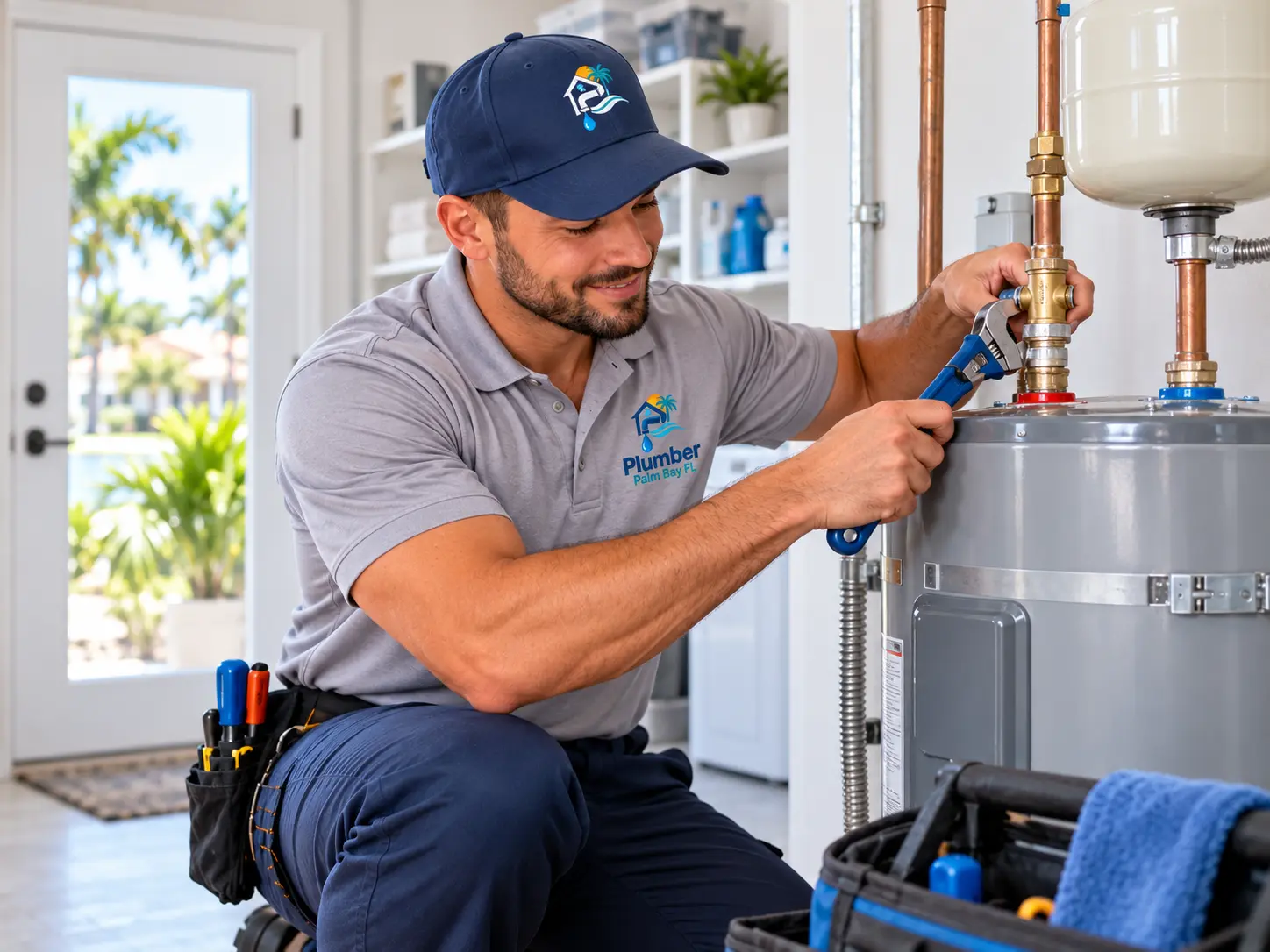
Replacement usually happens on one of two timelines: planned, because the existing unit is aging and you would rather choose than react, or immediate, because the tank has failed. The planned version produces better decisions and better pricing.
This page covers the choices involved. If your current unit is still holding water and simply not performing, water heater repair is the page that addresses diagnosis and component failures.
Tank or tankless
Conventional tank heaters store heated water and deliver it on demand until the tank is depleted, then recover. They are less expensive to install, simpler to service, and well suited to households with predictable, clustered hot water use.
Tankless units heat water as it flows, so hot water is not limited by tank volume. They occupy far less space, typically last longer, and reduce standby energy loss. In exchange they cost more up front, are sensitive to flow rate and incoming water temperature, need adequate gas supply or electrical capacity, and require periodic descaling in mineral-rich water.
Neither is universally better. Sizing and household demand decide it: a tankless unit that cannot keep up with two simultaneous showers is a downgrade, and an oversized tank in a two-person home is money spent heating water nobody uses.
Sizing it correctly
- Count the fixtures likely to run at the same time, not the total number in the house
- For tank units, first-hour rating matters more than raw gallon capacity
- For tankless, the figure that matters is flow rate at the required temperature rise
- Account for a large soaking tub, a multi-head shower or a high-demand appliance
- Consider whether household size is likely to change in the next several years
What a proper installation includes
The old unit is drained, disconnected and removed. Connections are inspected rather than reused blindly — flexible connectors, shutoff valve, dielectric unions and gas flex lines are replaced when their condition warrants it.
The new unit is set on an appropriate stand or pan with a drain routed to a safe discharge point, and a temperature and pressure relief valve with proper discharge piping is fitted. Gas units require correct venting and a combustion air path; electric units require correctly sized circuit and conductors. An expansion tank is added where the system requires one.
The unit is filled with air purged from the lines before power or gas is restored, then run through a full cycle with temperature verified at a fixture. Installation should also leave you with a clear picture of where the shutoffs are and what maintenance the specific unit needs.
Placement considerations in Palm Bay homes
Garage installations are common locally and generally the easiest to service. Units in interior closets need attention to combustion air, venting and pan drainage. Attic installations exist and demand particular care with pan and drain routing, since a failure above living space causes the most damage.
Access affects the job on both ends. A heater in a tight closet or up a pull-down ladder takes longer to remove and longer to install, and that shows up in labor. It also affects your future maintenance, which is worth weighing if placement can be changed.
Getting the most out of a new unit
- Flush the tank on a regular interval; put it on a calendar rather than a memory
- Have the anode rod checked periodically, since it is what protects the tank
- Descale tankless units on the manufacturer's recommended schedule
- Keep the area around the unit clear for airflow and service access
- Register the unit so warranty coverage is available if you need it
What this work usually costs
Installed cost is driven by the equipment itself, the fuel type, and how much of the surrounding setup has to change. A like-for-like tank replacement in an accessible garage is the straightforward case. Converting to tankless, upsizing capacity, relocating the unit, or bringing venting, gas sizing or electrical up to current requirements all add meaningfully.
The plumbing cost guide breaks down the variables in detail, and the cost calculator turns them into a planning range you can budget against.
Related plumbing services
Where this service is available
Palm Bay is the primary service market, along with these nearby Brevard County communities:
Water Heater Installation questions
Is a tankless water heater worth it in Florida?
The climate helps. Incoming water is warmer here than in northern states, so a tankless unit has less temperature rise to produce and can deliver a higher usable flow rate than the same unit installed farther north. That improves the practical case. The counterweights are up-front cost, the gas or electrical capacity the unit requires, and descaling maintenance in mineral-rich water. For a household with staggered hot water use and space constraints it is often a good fit; for a home with heavy simultaneous demand and a tight budget, a properly sized tank unit is still the sensible choice.
Can I install a water heater myself?
It is legal in some circumstances for an owner-occupant, but it involves gas or high-voltage electrical connections, correct venting, relief valve discharge routing and permit requirements, and mistakes in those areas are the ones with serious consequences. Improper venting on a gas unit can allow combustion gases into living space. An incorrectly sized or unpiped relief valve creates a pressure hazard. There is also the practical matter of moving a heavy tank in and out of a tight space. This is one of the jobs where professional installation earns its cost.
How long does a replacement take?
A straightforward like-for-like tank swap in an accessible location is usually a few hours, including draining the old unit, removing it, setting the new one, reconnecting, filling, purging air and verifying operation. Add time when connections need to be rebuilt, when the location is difficult, or when code items such as expansion tanks, pan drains or venting need correction. Converting from tank to tankless is a longer job because gas sizing, venting and mounting all change, and it may extend across more than one visit depending on what the conversion requires.
What size water heater does my home need?
Base it on peak simultaneous demand rather than square footage or bedroom count. For a tank unit, look at the first-hour rating — how much hot water it can deliver during a busy hour — rather than gallon capacity alone. For tankless, the relevant number is gallons per minute at the temperature rise your incoming water requires. A household where two showers and a dishwasher can overlap needs meaningfully more capacity than one where use is spread out. Sizing during a planned replacement is much easier than sizing during an emergency.
Need Plumbing Help in Palm Bay?
Describe what is happening and get help scheduling the right plumbing service for your home.