
Toilet Repair in Palm Bay FL
A toilet has few moving parts and each one produces a recognizable symptom. Knowing which symptom you have usually identifies the part before anyone opens the tank.
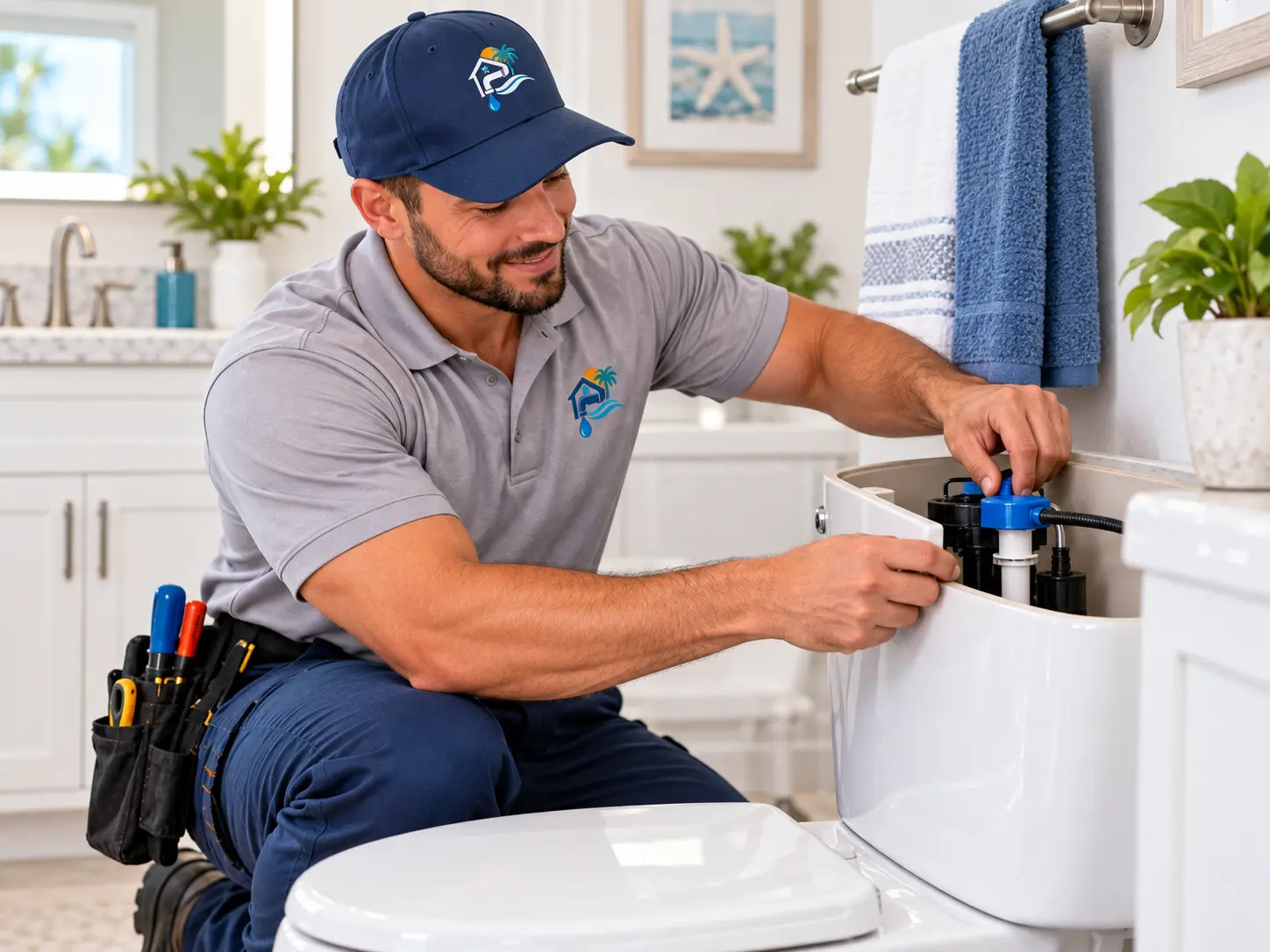
Toilets fail in ordinary ways: a flapper that no longer seals, a fill valve that will not shut off, a flush valve seat that has degraded, a wax ring that has lost its seal, or a closet flange that has broken loose from the floor.
The stakes vary a great deal by symptom. A running toilet costs money quietly. A leak at the base sends water into the subfloor, and that one has a deadline attached to it.
Matching the symptom to the part
- Runs continuously or cycles on its own: flapper not sealing, chain too tight, or fill valve failing to shut off
- Weak or incomplete flush: partially blocked rim jets, low tank level, or a flapper closing too early
- Water on the floor at the base: failed wax seal, cracked flange, loose closet bolts, or a hairline crack in the bowl
- Rocking or shifting bowl: loose bolts or a deteriorated flange — this one breaks seals if left alone
- Sweating tank in humid weather: condensation rather than a leak, though it can look identical
- Gurgling when other fixtures drain: a venting or main line issue rather than a toilet problem
Why running toilets deserve attention
A flapper that seals imperfectly lets tank water bleed into the bowl until the level drops enough to trigger the fill valve. The result is a toilet that refills every few minutes with nobody in the room, and a water bill that climbs steadily without a visible cause.
The fix is nearly always inexpensive. Flappers degrade from chlorine exposure and normal age, and matching the correct replacement to the flush valve is more important than the price of the part. Universal flappers fit many toilets but not all, and a poor match reproduces the original symptom within weeks.
Leaks at the base
Water pooling around the base after a flush usually means the wax seal between the toilet horn and the closet flange has failed, often because the bowl has been able to rock. Each movement breaks the seal a little more, and water escapes into the flooring rather than the drain.
The repair involves pulling the toilet, inspecting the flange, replacing the seal, and correcting whatever allowed the movement — new bolts, a flange repair ring, or shims and caulk to stabilize the base. Where the flange has broken or sits below finished floor level, it has to be repaired properly rather than compensated for with a thicker seal.
Extended leaking at the base often damages the subfloor. Soft or spongy flooring around a toilet is a sign the problem predates what you can see and may require more than a seal replacement.
Repair or replace the fixture
Tank components are consumables and repairing them is almost always worthwhile. A complete rebuild — fill valve, flapper, flush valve and supply line — costs a fraction of a new toilet and resolves the majority of complaints.
Replacement makes sense when the bowl or tank is cracked, when the toilet is a low-performing early water-saving model that has never flushed well, when parts are obsolete, or when you are already renovating. A cracked porcelain body is not repairable in any lasting way.
Safe homeowner checks
- Add a few drops of food coloring to the tank; color reaching the bowl without flushing confirms a leaking flapper
- Check that the chain has slight slack and is not holding the flapper open
- Confirm the water level sits below the top of the overflow tube
- Try a flange plunger before an auger on a clogged bowl
- Do not overtighten closet bolts — porcelain cracks and the crack is permanent
What this work usually costs
Tank component repairs are among the least expensive plumbing jobs. Pulling and resetting a toilet costs more because of the labor and the seal work involved, and it rises again if the flange is damaged or the subfloor has been affected by a long-running leak.
The plumbing cost guide breaks down the variables in detail, and the cost calculator turns them into a planning range you can budget against.
Related plumbing services
Where this service is available
Palm Bay is the primary service market, along with these nearby Brevard County communities:
Toilet Repair questions
Why does my toilet keep running?
Nearly always the flapper or the fill valve. The flapper is a rubber seal that lifts to flush and drops to hold water in the tank; as it ages it hardens and stops sealing, letting water bleed into the bowl until the level drops far enough to restart the fill valve. The other common cause is a fill valve that no longer shuts off completely, sending water into the overflow tube continuously. A food-coloring test distinguishes them: color appearing in the bowl without a flush points to the flapper. Both are inexpensive parts, and both waste a meaningful amount of water until replaced.
Is water around the base of the toilet urgent?
It deserves prompt attention. Unlike a tank leak, water at the base is going into the flooring and subfloor rather than back into the drain, and the damage accumulates out of sight. First rule out condensation, which is common in humid weather and appears on the tank exterior rather than only after flushing. If water appears specifically after a flush, the wax seal has likely failed and the toilet needs to be pulled and reset. A bowl that rocks when you shift your weight is the usual cause and will keep breaking new seals until the flange and bolts are corrected.
Why is my toilet flushing weakly?
Weak flushing is usually about water delivery rather than the drain. Mineral deposits gradually block the small rim jets and the siphon jet at the bottom of the bowl, reducing the swirl and force of the flush. A tank water level set too low delivers less volume than the design requires, and a flapper closing early cuts the flush short. Check the tank level against the marked line first, then look at whether the flapper stays open through the full flush. If flow looks correct but waste still backs up, the branch drain or vent is the more likely culprit.
Can a toilet cause high water bills?
It is one of the most common causes of an unexplained increase. A silent leak past the flapper can pass a substantial volume of water every day without any visible sign, since it drains straight into the bowl and down the trap. Homes with multiple bathrooms often have this happening in a guest bathroom nobody uses regularly. Testing every toilet with dye takes a few minutes and costs nothing. If the bill has jumped and every toilet tests clean, the next step is checking the meter with all fixtures off to look for a supply-side leak.
Need Plumbing Help in Palm Bay?
Describe what is happening and get help scheduling the right plumbing service for your home.